Chronic back pain can affect everyday activities, work, sleep and overall quality of life. Long hours of sitting, poor posture, lack of physical activity, muscle strain, age-related changes and certain musculoskeletal conditions can all contribute to persistent back discomfort. Because the cause and severity vary from person to person, identifying the underlying factors is an important part of managing it.
Ayurveda takes an individualised approach to back pain, considering the person's symptoms, physical condition, lifestyle and overall health before selecting appropriate therapies.
Understanding chronic back pain
Back pain may occur in the lower, middle or upper back and can range from mild discomfort to persistent pain that interferes with daily activities. Common contributing factors include:
- Prolonged sitting or standing
- Poor posture
- Repetitive physical activity
- Muscle or ligament strain
- Age-related changes in the spine
- Sciatica
- Spondylosis
- Lack of regular movement and exercise
When back pain continues for an extended period or keeps returning, a professional assessment can help identify the possible cause and determine an appropriate treatment approach.
How does Ayurveda approach back pain?
Ayurvedic treatment focuses on understanding the individual's condition rather than following a single treatment method for everyone. An Ayurvedic physician may consider the patient's symptoms, health history, lifestyle, physical strength and other relevant factors before developing a treatment plan.
Depending on the individual's condition, Ayurvedic management may include traditional therapies, internal medicines when prescribed, dietary guidance, lifestyle modifications and supportive practices.
Ayurvedic therapies for back pain
Depending on the condition and the physician's assessment, traditional Ayurvedic therapies may be incorporated into a treatment plan.
-
Abhyanga
Abhyanga is a traditional Ayurvedic oil massage that may be used as part of supportive care for certain musculoskeletal conditions. The choice of oil, technique and duration can vary according to the individual's needs.
-
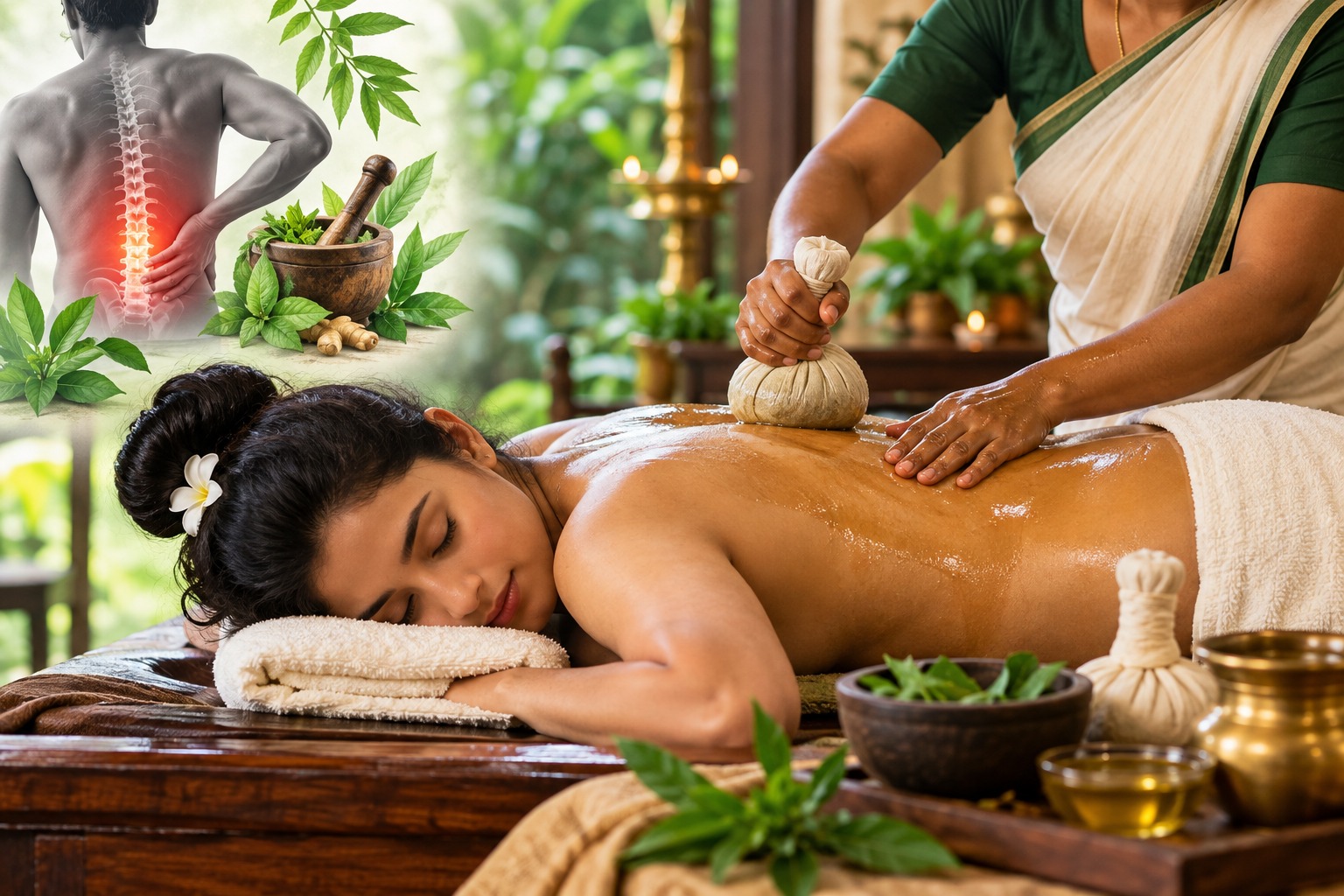
Kizhi
Kizhi involves the application of herbal preparations in specially prepared boluses. Different types of Kizhi may be selected depending on the individual's condition and treatment requirements.
-
Pizhichil
Pizhichil is a traditional Ayurvedic therapy involving the gentle pouring of warm medicated oil over the body. It may be included in treatment plans for selected musculoskeletal conditions under professional supervision.
-
Vasti
Vasti is one of the traditional Panchakarma therapies. Depending on the individual's condition, an Ayurvedic physician may consider specific forms of Vasti as part of a personalised treatment plan.
-
Panchakarma
Panchakarma comprises traditional Ayurvedic cleansing and therapeutic procedures. It is not a one-size-fits-all treatment: the procedures and their duration are selected based on individual assessment and clinical requirements.
Ayurveda for sciatica and spondylosis
Conditions such as sciatica and spondylosis can be associated with back pain, stiffness, restricted movement, or pain extending into other areas.
Ayurvedic care for these conditions may involve a combination of therapies and lifestyle guidance selected according to the individual's symptoms and physical condition.
A proper assessment is important before beginning any treatment for sciatica or spondylosis.
Lifestyle practices that support back health
Along with professional care, everyday habits can influence back health. Helpful practices may include:
- Maintain proper sitting and standing posture.
- Take regular breaks from prolonged sitting.
- Stay physically active within your limits.
- Avoid sudden or excessive physical strain.
- Maintain a healthy body weight.
- Get adequate rest and sleep.
- Follow exercise or stretching advice from a qualified professional.
People experiencing persistent or severe pain should seek appropriate medical evaluation rather than relying solely on home remedies.
When should you consult a doctor?
Professional medical assessment is particularly important when back pain:
- Persists or repeatedly returns
- Interferes with everyday activities
- Becomes progressively worse
- Is associated with numbness or weakness
- Develops after an accident or injury
- Is accompanied by other concerning symptoms
The underlying cause of back pain can differ significantly between individuals, so treatment should be based on proper evaluation.
Personalised Ayurvedic care at Krishnendu Ayurveda
At Krishnendu Ayurveda, traditional Ayurvedic care is provided with an emphasis on individualised treatment. Established in 1908, Krishnendu Ayurveda follows a fourth-generation tradition of Ayurvedic physicians and offers therapies for various musculoskeletal conditions, including back pain.
Treatment is planned according to the individual's condition and may involve a combination of Ayurvedic therapies, medicines, diet and lifestyle guidance under the supervision of qualified physicians.
Chronic back pain can have different causes and may need a personalised approach to care. Ayurveda approaches musculoskeletal conditions by considering the individual's symptoms, overall health, lifestyle and specific treatment requirements. If you are experiencing persistent back pain, consulting a qualified healthcare professional can help determine the underlying cause and the most appropriate approach to treatment.
Disclaimer: This article is for general educational purposes and does not replace professional medical advice. If you are considering Ayurvedic treatment for back pain, consult a qualified Ayurvedic physician for an individual assessment rather than attempting to self-treat.
Living with persistent back pain?
An individual assessment makes far more difference than a general routine. Speak with a qualified Ayurvedic physician before starting any treatment.